By: John Grayshaw, Library Manager
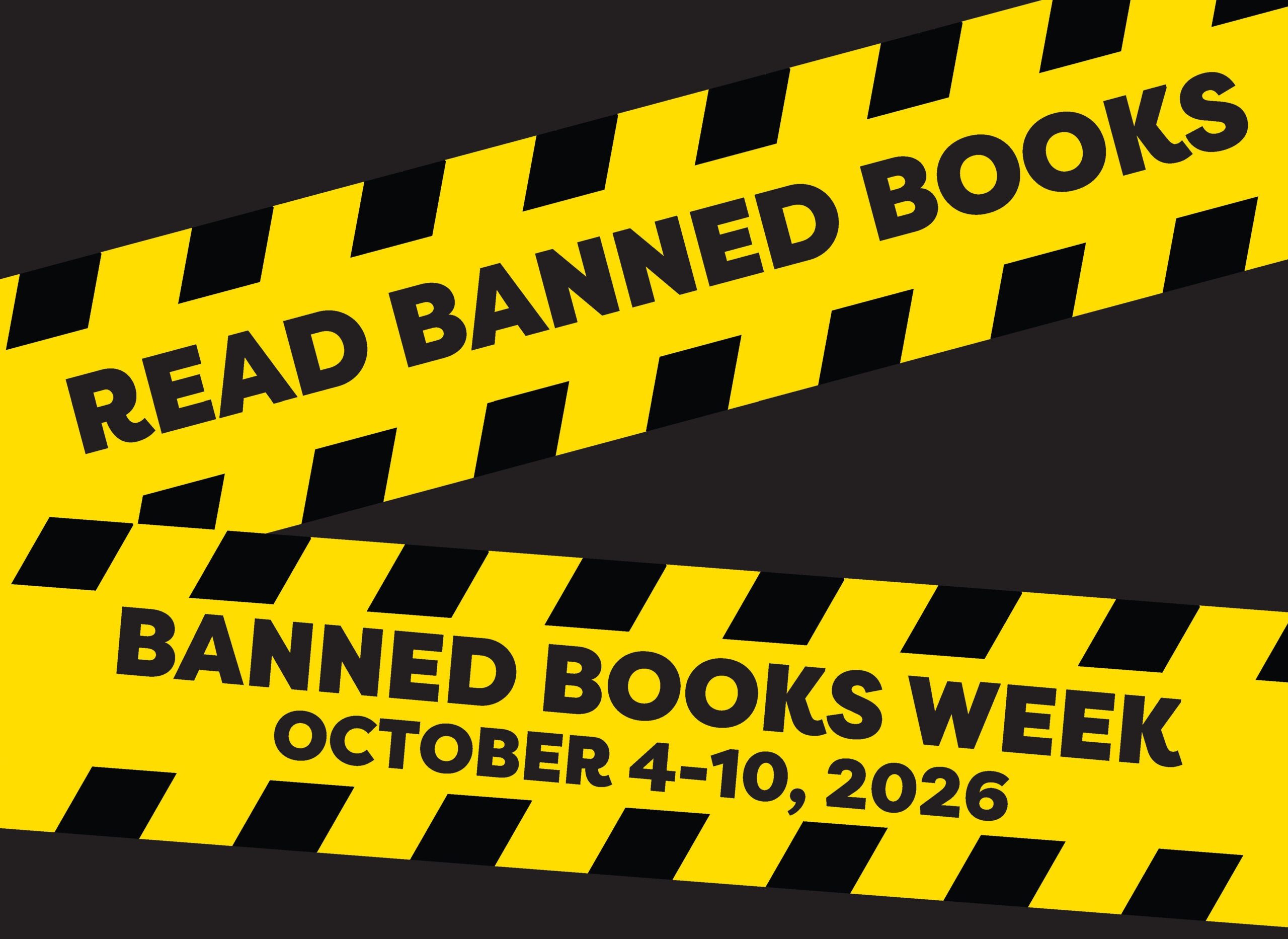
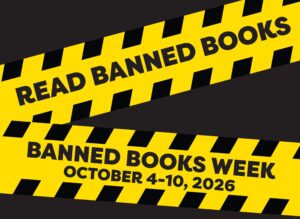 Banned Books Week is coming up from October 4 to 10. It’s a time when libraries highlight novels that have recently been challenged to illustrate an uncomfortable truth. People who fight to ban or censor books think they are valiantly protecting the public. Often the target of such challenges is school libraries where the intention is to shelter young minds. But librarians don’t see such actions as heroic.
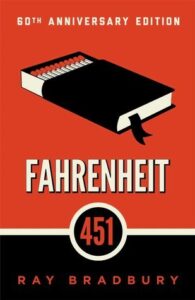
Ray Bradbury wrote the novel “Fahrenheit 451” (1953) about censorship. In the story, in a dark future, firemen don’t fight fires; they start them, and what they burn is any books they find because they are filled with dangerous ideas.
In some ways, this is a metaphor, as Bradbury said in the novel’s Coda (included since 1979): “There is more than one way to burn a book, and too many people in this world are running around with lit matches.”
In June of 2023, Central York School District (CYSD) made history as the first in the US to prohibit banning library books. It passed a policy that created several categories for books in the district’s library system based on readers’ ages. Parents can restrict their children’s access to those age-based categories and request that books be categorized by content. But the books remain on the shelves!
During Banned Books Week in 2024, board member Aelia McMillan posted on X, “The freedom to read and the freedom to learn are making our school community stronger than ever.
Previously, when the district banned books in 2020 and 2023, the community found out and protested. Students formed the Panther Anti-Racist Union. Community members and students spoke out regularly at school board meetings asking for the books to be returned.
Students protested outside before school hours, holding signs that read: “My voice matters,” “Enough is enough CYSD,” “Committed to fighting racism,” and “Education is not indoctrination.” They also chanted, “Put the books back.”
“We believe the current policy sets an example and puts the District ahead of the curve in regard to the similar discussions now taking place at school districts across the state and country,” said district spokesperson Robert Sutherland via email to the York Dispatch.
According to the American Library Association, here are some of the most commonly banned books from 2010-2019:
The Captain Underpants series by Dav Pilkey
Hunger Games by Suzanne Collins
To Kill a Mockingbird by Harper Lee
Bone series by Jeff Smith
–
Here are some of the most commonly banned books from 2000-2009:
Harry Potter series by J.K. Rowling
Of Mice and Men by John Steinbeck
I Know Why the Caged Bird Sings by Maya Angelou
Scary Stories series by Alvin Schwartz
His Dark Materials by Philip Pullman
The Adventures of Huckleberry Finn by Mark Twain
Catcher in the Rye by J.D. Salinger
–
Here are some of the most commonly banned books from 1990-1999:
The Chocolate War by Robert Cormier
Forever by Judy Blume
Bridge to Terabithia by Katherine Paterson
Heather Has Two Mommies by Leslea
The Giver by Lois
Goosebumps series by R.L. Stine
A Day No Pigs Would Die by Robert Newton Peck
–
For a last word on censorship, we return to Ray Bradbury and the Coda of Fahrenheit 451.
“Some five years back, the editors of yet another ant
hology for school readers put together a volume with some 400 (count ‘em) short stories in it.
How do you cram 400 short stories by Twain, Irving, Poe, Maupassant and Bierce into one book?
Simplicity itself. Skin, debone, demarrow, scarify, melt, render down and destroy. Every adjective that counted, every verb that moved, every metaphor that weighed more than a mosquito-out! Every simile that would have made a sub-moron’s mouth twitch-gone! Any aside that explained the two-bit philosophy of a first-rate writer-lost!
Every story, slenderized, starved, bluepenciled, leeched and bled white, resembled every other story. Twain read like Poe read like Shakespeare read like Dostoevsky read like-in the finale- Edgar Guest. Every word of more than three syllables had been razored. Every image that demanded so much as one instant’s attention-shot dead.
Do you begin to get the damned and incredible picture?
How did I react to all of the above?
By “firing” the whole lot.
By sending rejection slips to each and every one.
By ticketing the assembly of idiots to the far reaches of hell.”

 I am especially excited that our first speaker is Rhonda R. McClure, a senior genealogist with American Ancestors. She will be introducing the genealogy resources that are available here in Pennsylvania. As one of the original thirteen colonies, Pennsylvania has a wealth of resources available to those lucky enough to have ties to this area.
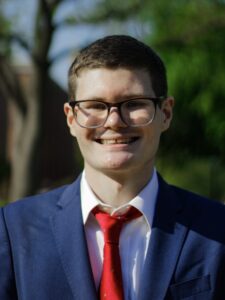 , a genetic genealogist and public historian. He will be discussing genealogy’s use in solving crimes and will explain how it has been used to help solve some of Pennsylvania’s oldest cold cases. Whether you are more interested in the true crime or genealogy aspect of this discussion, it is sure to be an intriguing event.