
By: Dwana Pinchock, Marketing & Public Relations Manager
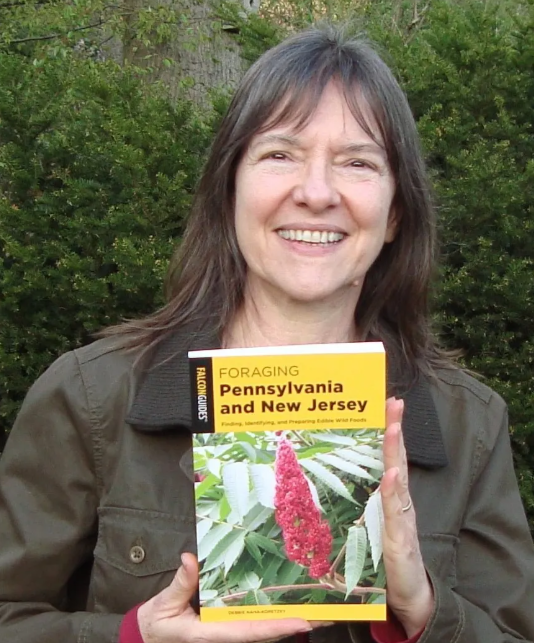
Most of us have walked past a dandelion without giving it a second thought. Debbie Naha-Koretzky sees something entirely different.
To the naturalist, nutritionist, and author, that familiar yellow flower isn’t a weed at all. It’s the beginning of a lifelong fascination with the edible plants growing in our neighborhoods, parks, and even the cracks in the sidewalk.
“I think of dandelions as my gateway plant into foraging,” she says.
That discovery happened while Debbie was studying biology at New Jersey City University. A fellow student casually mentioned that the dandelions growing on campus were edible. Curious, Debbie added the leaves and flowers to her salads.
“I was amazed,” she recalls. “I wondered what else was out there in nature that was food.”
That curiosity has shaped an extraordinary career. After earning a master’s degree in clinical nutrition from New York University and working as a clinical nutritionist in New York City hospitals, Debbie continued studying wild edible plants while also working as a naturalist. Today, she’s known throughout the region as the “Wild Edibles Lady,” a nickname that stuck after someone called out the title before one of her foraging walks.
Her mission is simple: help people see the natural world in an entirely new way.
“People are surprised to learn that wild food is everywhere,” she says.
One of the first plants she introduces during a foraging walk is often plantain—not the tropical fruit, but the common backyard weed known scientifically as Plantago. Mild enough to eat raw or cooked, plantain is one of countless edible plants that many people pull from their gardens without realizing its value.
Of course, Debbie is quick to emphasize that curiosity should always be paired with caution.
“Know the plant before you put it in your mouth!” she says.
That advice goes beyond simply identifying a leaf. Some wild foods require special preparation before they’re safe to eat. Others are edible only when fully ripe. Location matters, too. Plants growing near busy roads or in areas treated with pesticides should always be avoided.
Her background in clinical nutrition influences every class she teaches.
“I take pride in providing accurate, evidence-based information,” Debbie says. “When I talk about nutrition or health claims, I want them to be supported by science.”
That’s one reason she encourages beginners to learn from multiple reliable sources rather than relying on a single website or social media post.
“Don’t believe everything you read online,” she says. “There’s a lot of nonsense out there.”
For Debbie, every season brings something new to discover.
Summer offers sweet rewards like mulberries, blackberries, raspberries, elderberries, and black cherries. She also looks forward to nutritious greens such as purslane, lamb’s-quarter, and heal-all. Autumn brings native black walnuts and wild persimmons, while spring announces itself with the first nettles and bittercress.
Her favorite recipes are just as approachable as the plants themselves. Garlic Mustard Quesadillas have become a favorite with audiences, while homemade shagbark hickory syrup is, in her words, “out of this world” over pancakes. Many of those recipes appear in her newest book, The Northeastern Forager’s Cookbook, released earlier this summer. 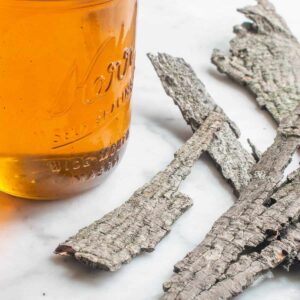
Perhaps the greatest gift of foraging isn’t the food at all.
“Foraging changes the way people see their natural environment,” Debbie says.
Even when collecting plants isn’t permitted, simply learning to recognize them transforms an ordinary walk into an opportunity for discovery. Spending time in nature has been shown to reduce stress, and Debbie believes observing the landscape more closely helps people reconnect with the outdoors—and with their own curiosity.
“I certainly feel happier in green places,” she says.
Dauphin County Library System members will have two opportunities to learn from Debbie this year. Her outdoor foraging walk at the Hummel Nature Trail on August 4th invites participants to meet edible plants in their natural habitat, while her September 17th program at Madeline Olewine Memorial Library combines an indoor presentation with a short outdoor identification walk.
Her hope is that participants leave seeing the world just a little differently.
“I feel that we’ve become so disconnected from the wild food that grows all around us,” Debbie says. “Take your field guide and go out. Be curious.”
You may never look at your backyard (or a dandelion) the same way again.


 Even when library programs are out of session or unavailable,
  For additional ideas and support, families with children entering kindergarten can attend our Kindergarten Fairs scheduled in August. The Library has two events scheduled. One is on Tuesday, August 18th, at 5:00 pm at the Salvation Army (506 S. 29th Street, Harrisburg). The second is on August 22 , 2026, at 11:00 am and will be held at the Ned Smith Center (176 Water Company Road, Millersburg). The fairs will have activities, resources, and community partners available to answer questions about how to support your scholars.